
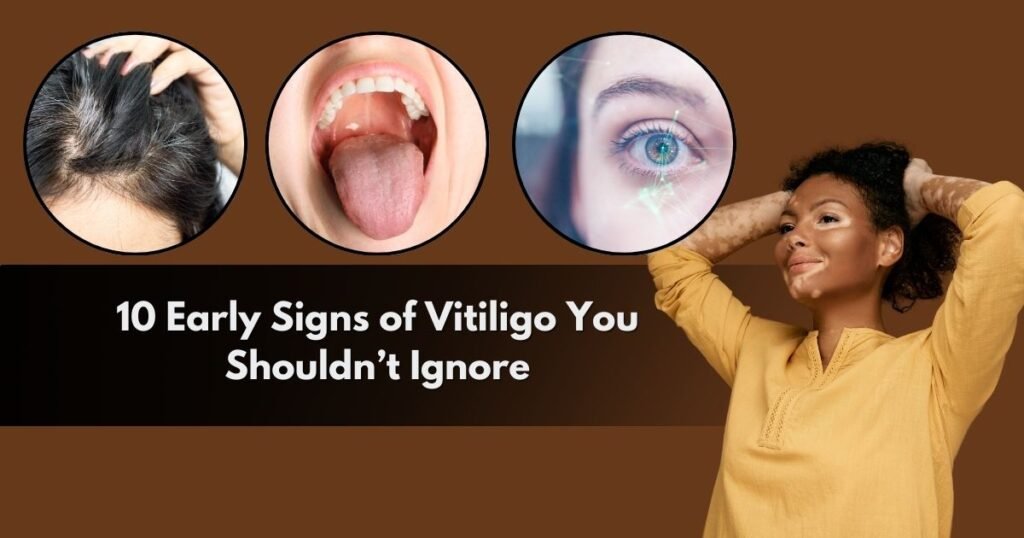
10 Early Signs of Vitiligo You Shouldn’t Ignore: Vitiligo is a chronic skin condition characterized by the gradual loss of pigment-producing cells called melanocytes. These cells are responsible for producing melanin, the pigment that gives skin, hair, and eyes their color. When these cells are destroyed or stop functioning, patches of skin become lighter or white.
This condition can affect any part of the body and people of all skin types, but it’s more noticeable in individuals with darker skin. Though vitiligo is not life-threatening or contagious, it can deeply affect a person’s self-esteem and emotional well-being.
Why Early Detection of Vitiligo is Crucial?
Spotting the early signs of vitiligo can help individuals seek treatment and support sooner. Early intervention may slow the spread of depigmentation, preserve existing pigment, and provide coping tools to deal with the condition effectively. Timely medical advice can also rule out other underlying autoimmune conditions.
1. Patchy Loss of Skin Color
One of the earliest and most obvious signs of vitiligo is the appearance of pale or white patches on the skin. These patches often start small but can grow over time. Common areas affected first include:
- Hands
- Face
- Feet
- Elbows
- Knees
These patches tend to be asymptomatic, meaning there’s no itching or pain, which makes them easy to ignore. But paying attention at this stage is crucial.
Also Read: Can Vitiligo Spread? Understanding Progression and What You Need to Know
2. Premature Graying of Hair
If you notice strands of hair on your scalp, eyebrows, eyelashes, or beard turning gray or white before the age of 35, it could be a subtle sign of vitiligo. Since melanocytes also pigment hair, their early destruction can lead to noticeable graying.
3. Color Loss Inside the Mouth and Nose
Another less-known but early indicator of vitiligo is the depigmentation of mucous membranes, particularly the inner lips, gums, and nostrils. If these areas appear pale or white, it’s time to consult a dermatologist.
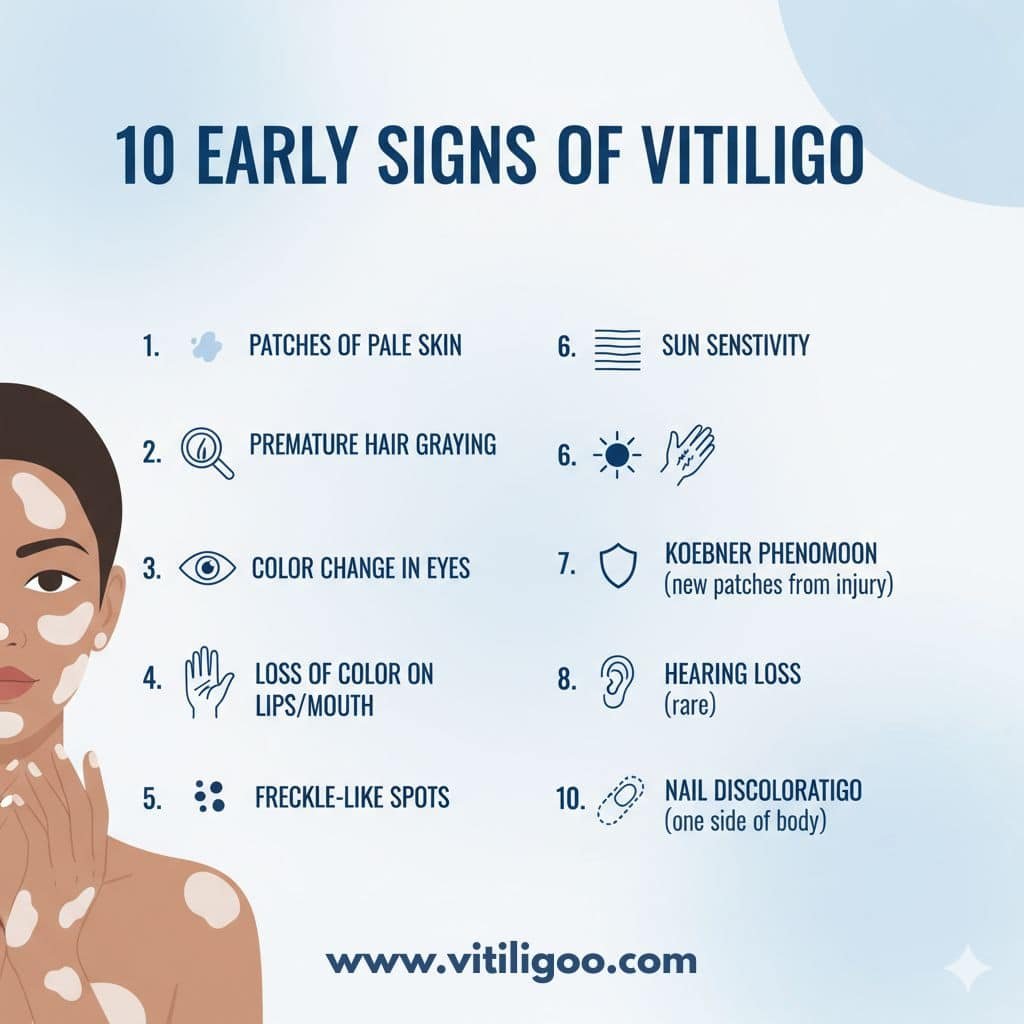
4. Sudden Change in Skin Tone After Sun Exposure
When you spend time in the sun, areas of vitiligo might not tan, making the contrast between affected and unaffected skin more noticeable. This discrepancy can highlight early-stage vitiligo in people who otherwise hadn’t noticed it.
5. Loss of Color in the Retinas
Vitiligo may also subtly affect the eyes, particularly the retina. Although it doesn’t usually impair vision, pigment changes in the retina may occur and often go unnoticed without a thorough eye exam.
6. Discolored Areas Around Body Openings
Depigmentation may begin around orifices such as the:
- Mouth
- Eyes
- Genitals
- Navel
- Nose
These areas may show signs of pigment loss before spreading elsewhere on the body.
7. Symmetrical Pigment Loss
Vitiligo often appears in a symmetrical pattern. For example, if you notice white patches on both hands or both knees in the same place, it’s worth getting checked out. Symmetry is a telltale sign of autoimmune involvement.
8. Itchy or Inflamed Patches Before Depigmentation
Although vitiligo is typically not itchy, some individuals report mild itching or inflammation in areas before pigment loss begins. If you notice these symptoms coupled with patchy lightening, they may be connected.
9. Family History of Autoimmune Disorders
If vitiligo or other autoimmune diseases like thyroid disease, type 1 diabetes, or alopecia areata run in your family, you may have a higher risk. Family history is not a direct symptom but a crucial red flag to keep in mind.
10. Nail and Finger Pigment Changes
Subtle signs may also appear in the fingernails, such as:
- Depigmented spots near cuticles
- Stripe-like pigment loss along the nail
- Changes in nail texture
These changes, while minor, can hint at early autoimmune responses in the body.
Also Read: Best way to Increase Melanin in Skin for Vitiligo Naturally?
Risk Factors and Causes of Vitiligo
While the exact cause remains unknown, several factors may contribute to the onset of vitiligo:
- Autoimmune responses
- Genetics
- Skin trauma or burns (Koebner phenomenon)
- Environmental triggers
- Oxidative stress
How Vitiligo is Diagnosed
Dermatologists often use the following methods to diagnose vitiligo:
- Wood’s lamp examination
- Skin biopsy
- Blood tests (to check for thyroid function or autoimmune markers)
- Photographic tracking
An accurate diagnosis helps differentiate vitiligo from other pigment-related conditions.
Treatment Options for Vitiligo
While there’s no permanent cure, treatments can help slow or reverse depigmentation:
- Topical corticosteroids
- Calcineurin inhibitors
- Phototherapy (NB-UVB)
- Excimer laser
- Depigmentation therapy (for extensive cases)
- Skin grafts
- Micropigmentation (tattooing)
Early-stage treatment often yields better results, especially if started soon after symptom onset.
Coping with Vitiligo Emotionally and Socially
Living with vitiligo can take an emotional toll. Here’s how to cope:
- Join support groups
- Talk to a therapist
- Educate others around you
- Use camouflage cosmetics
- Celebrate your unique skin
Many celebrities and influencers openly share their vitiligo journey, creating awareness and breaking stigmas.
FAQs About Vitiligo
Can vitiligo be cured completely?
No, but treatment can stop or slow the progression and even restore pigment in some areas.
Is vitiligo contagious?
Absolutely not. It cannot be spread through physical contact or shared items.
Can vitiligo start at any age?
Yes, but it most commonly begins before age 30.
What triggers vitiligo?
Triggers may include stress, sunburn, injuries, or exposure to certain chemicals.
Does diet affect vitiligo?
While no specific diet cures vitiligo, a balanced diet rich in antioxidants can support skin health.
Can stress cause vitiligo to worsen?
Yes, emotional stress can exacerbate autoimmune responses, potentially worsening vitiligo.
Join our WhatsApp Channel for more Updates & Information about Vitiligo!


whoah this weblog is wonderful i really like reading your articles.
Keep up the great work! You already know, many people are hunting around for this information,
you can help them greatly.
Thank you for another excellent article. The place else could anyone get that type of information in such an ideal method
of writing? I’ve a presentation subsequent week, and I am on the look for
such information.
I every time emailed this webpage post page to all my contacts, because if like to read it
next my contacts will too.
Pingback: First Signs of Vitiligo: How to Identify Skin Changes Early - Vitiligoo
This is the right site for everyone who wants to find out about this topic.
You know so much its almost hard to argue with
you (not that I really would want to…HaHa).
You certainly put a new spin on a subject that has been written about for decades.
Wonderful stuff, just wonderful!
Pingback: Top Vitiligo Treatments in 2025: What’s Working Now? - Vitiligoo
This is my first time pay a visit at here and i am in fact impressed to read everthing at one place.
What’s up, after reading this remarkable piece of writing i
am also cheerful to share my know-how here with colleagues.
Thanks for finally talking about > 10 Early Signs of Vitiligo: How to Recognize
Symptoms? – Vitiligoo < Loved it!
Just wish to say your article is as astounding. The clarity in your post is simply great and i can assume you are an expert on this subject. Fine with your permission let me to grab your RSS feed to keep updated with forthcoming post. Thanks a million and please keep up the enjoyable work.
You are so cool! I don’t think I’ve truly read through something like this before.
So wonderful to find another person with genuine thoughts on this subject.
Seriously.. many thanks for starting this up. This
site is one thing that is needed on the web, someone with a little originality!
Hey there! I know this is kind of off topic but I was wondering which
blog platform are you using for this website?
I’m getting tired of WordPress because I’ve had problems with hackers and I’m looking at alternatives
for another platform. I would be fantastic if you could
point me in the direction of a good platform.
The other day, while I was at work, my cousin stole my apple ipad and tested to see if it can survive a twenty five foot
drop, just so she can be a youtube sensation. My iPad is
now broken and she has 83 views. I know this is totally off topic but I had to
share it with someone!
I pay a quick visit everyday a few sites and sites to read posts, except this webpage presents feature based
content.
You really make it seem so easy with your presentation but I find this matter to be really something that I think I would never understand.
It seems too complicated and very broad for me. I am looking forward for your next post, I
will try to get the hang of it!
Informative article, totally what I was looking for.
Excellent way of describing, and pleasant piece of
writing to take facts on the topic of my presentation subject, which
i am going to present in academy.
Good day! This is kind of off topic but I need some help from an established blog.
Is it very difficult to set up your own blog? I’m not very techincal but I
can figure things out pretty quick. I’m thinking about making my own but I’m not
sure where to begin. Do you have any tips or suggestions?
With thanks
Its such as you read my thoughts! You seem to grasp so
much about this, like you wrote the e-book in it or something.
I feel that you simply could do with a few % to drive the message home a
little bit, but other than that, this is excellent
blog. An excellent read. I will certainly be back.
I am not sure where you are getting your information, but good topic.
I needs to spend some time learning more or understanding more.
Thanks for great information I was looking for this info for my mission.
Hey there! I understand this is kind of off-topic
however I needed to ask. Does operating a well-established blog such
as yours take a massive amount work? I’m completely new to writing a blog but I
do write in my diary daily. I’d like to start a blog so I can share my own experience and
feelings online. Please let me know if you have any recommendations or tips
for new aspiring blog owners. Appreciate it!
It’s great that you are getting ideas from this paragraph as well as from our discussion made
at this place.
Greetings! Very useful advice in this particular post! It is the little changes that produce the
largest changes. Thanks a lot for sharing!