
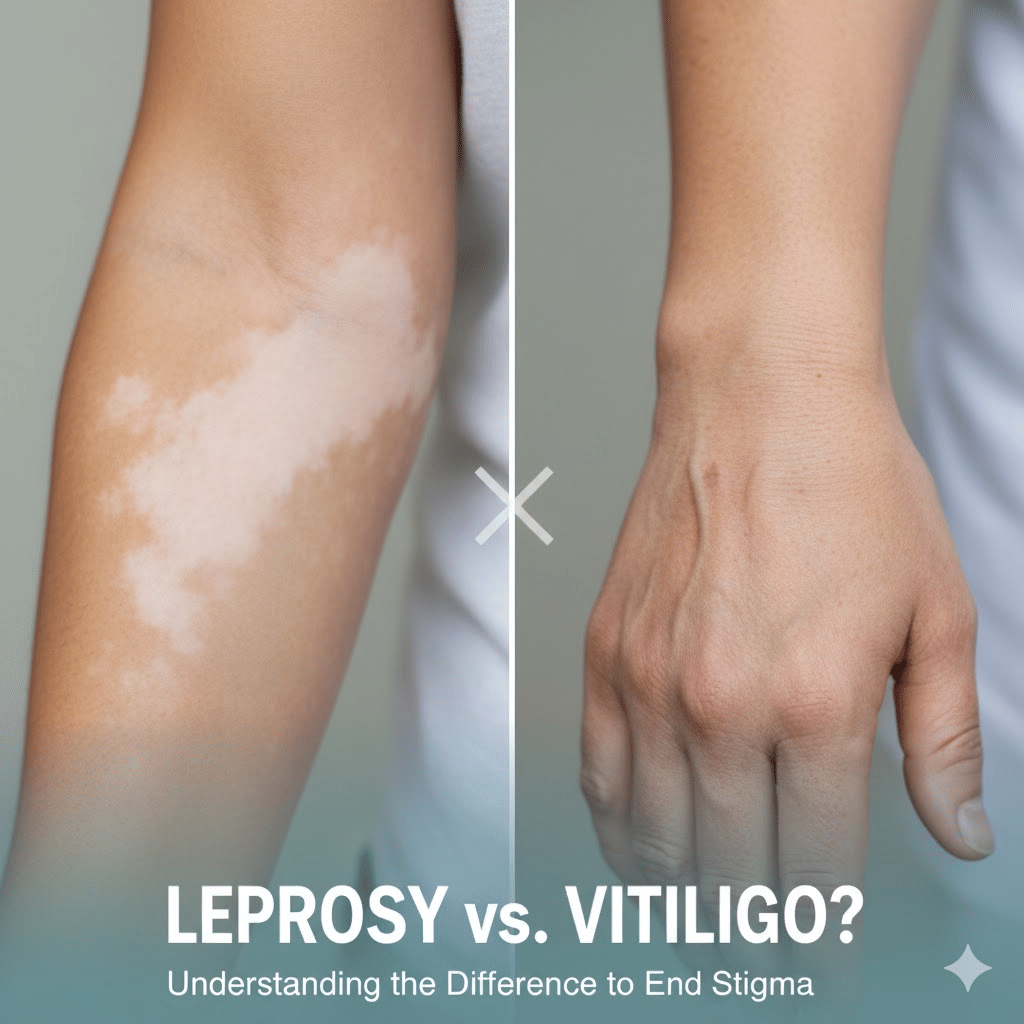
Many people still confuse leprosy and vitiligo because both affect the skin and cause visible changes in pigmentation. But in reality, these are two completely different medical conditions—one caused by infection and the other by loss of skin pigment. Understanding the difference can help end unnecessary fear and social stigma.
What Is Leprosy?
Leprosy, also known as Hansen’s disease, is a chronic bacterial infection caused by Mycobacterium leprae. It primarily affects the skin, nerves, eyes, and respiratory tract. The disease spreads through prolonged close contact with an untreated infected person, though it is not highly contagious.
Symptoms of leprosy:
- Light or dark patches on the skin that may feel numb
- Loss of sensation, especially in hands and feet
- Weakness in muscles
- Ulcers or nodules on the body
- Eye problems in severe cases
Leprosy is curable with multidrug therapy (MDT), which the World Health Organization provides free of charge globally.
Also Read: How to Identify Vitiligo Spots Early: Clear Signs and Simple Tips
What Is Vitiligo?
Vitiligo is a non-infectious autoimmune condition in which the body’s immune system mistakenly destroys melanocytes- the cells responsible for producing skin pigment (melanin). This results in white or depigmented patches on the skin.
Symptoms of vitiligo:
- White or light patches on the skin
- Premature graying of hair on scalp or eyelashes
- Loss of color inside the mouth or nose
Vitiligo is not caused by germs or infections and cannot spread from person to person through touch, sharing meals, or any contact.
Key Differences Between Leprosy and Vitiligo
| Feature | Leprosy | Vitiligo |
|---|---|---|
| Cause | Bacterial infection (Mycobacterium leprae) | Autoimmune destruction of pigment cells |
| Contagious | Mildly contagious | Not contagious |
| Nature | Infectious disease | Autoimmune skin condition |
| Skin sensation | Often numb or decreased | Normal sensation |
| Treatment | Antibiotic combination therapy | Phototherapy, topical creams, or immune-modulating drugs |
| Curable | Yes, completely curable | Not completely curable, but manageable |
| Stigma reason | Fear of infection | Misconception of disease association |
Why the Confusion Happens
In early stages, leprosy may appear as light patches resembling vitiligo, leading to confusion and fear. However, leprosy patches are numb and often associated with nerve damage, while vitiligo patches only involve pigment loss without any feeling changes.
Breaking the Stigma
Both conditions have faced social stigma for centuries. People with leprosy were historically isolated due to fear of infection, and individuals with vitiligo often face discrimination due to visible skin differences.
It’s crucial to promote awareness that:
- Leprosy is fully treatable and curable.
- Vitiligo is non-contagious and purely a pigment condition.
- Neither should be a reason for social exclusion.
Also Read: The Truth About Marrying a Person with Vitiligo: Myths, Facts, and Real Love
When to See a Doctor
If you or someone you know develops skin patches or discoloration, consult a dermatologist or general physician. Early diagnosis ensures proper treatment and prevents complications or unnecessary anxiety.
Final Thoughts
Leprosy and vitiligo are distinct medical conditions, and confusing one for the other only adds to social stigma. Sharing accurate information can help communities show compassion, encourage early treatment, and end myths surrounding skin conditions.

