
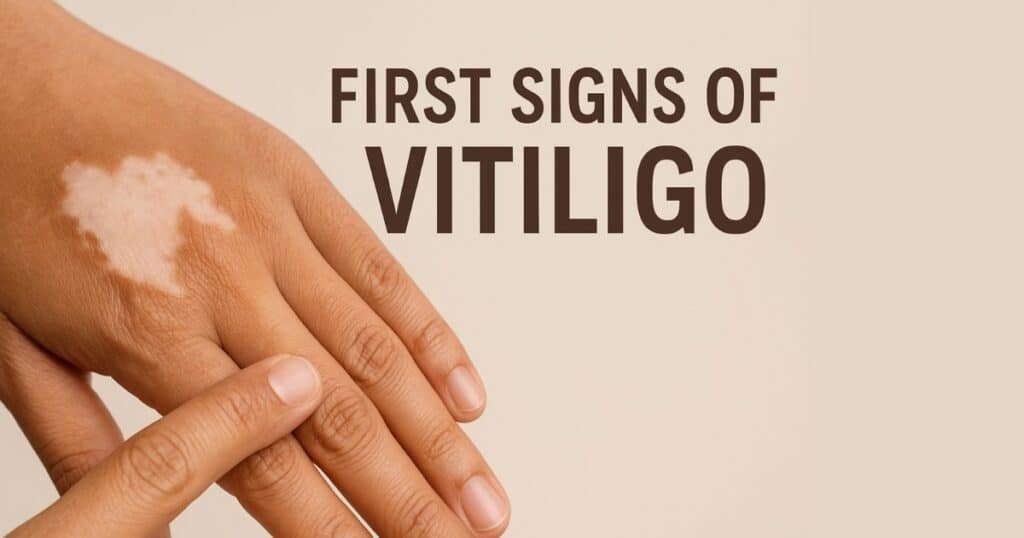
The first signs of vitiligo usually involve the gradual loss of skin color, resulting in lighter or white patches on specific parts of the body. These changes often appear on sun-exposed areas, such as the hands, face, arms, feet, and around body openings. Early detection and understanding of vitiligo symptoms can help in seeking medical advice and emotional support at the right time.
What is Vitiligo?
Vitiligo is a long-term skin condition characterized by the loss of pigment, leading to pale or white patches on the skin. This happens because the pigment-producing cells (melanocytes) are damaged or destroyed. The condition can affect anyone, regardless of age, gender, or ethnicity.
Also Read: Leukoderma vs Vitiligo: 7 Key Differences You Need to Know
First Signs of Vitiligo
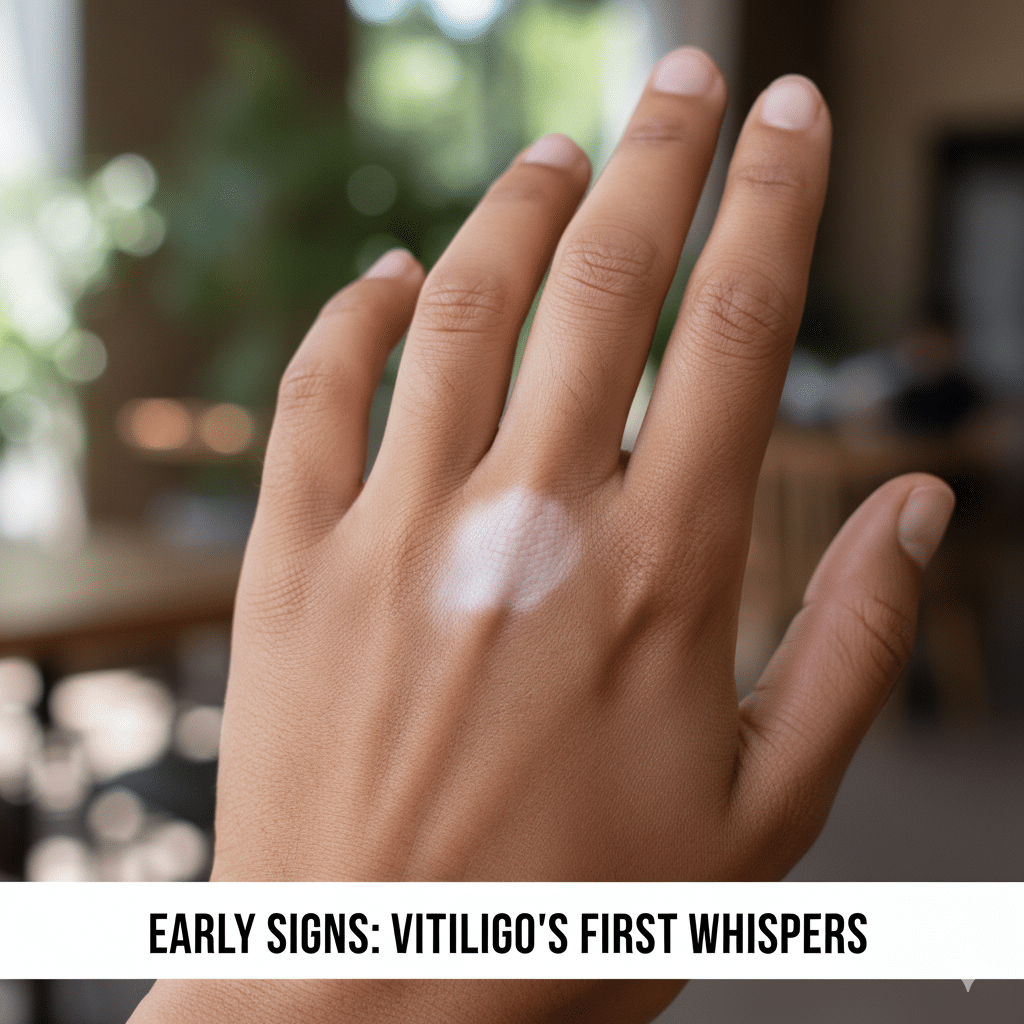
- Light or White Patches on Skin: The first and most noticeable sign is a patchy loss of skin color. These patches often start small and may gradually increase in size.
- Common Areas for Early Patches: Initial patches usually appear on the hands, face, around the eyes, mouth, fingers, feet, arms, and other body openings like the nose and genitals.
- Premature Graying of Hair: Early whitening or graying of hair on the scalp, eyebrows, eyelashes, or beard can occur even before age 30.
- Loss of Color in Mucous Membranes: Another early sign can be light patches inside the mouth or nose.
- Changes in Eye Color: Rarely, the inside layer of the eye (retina) may lose color.
- Itchiness Before Appearance: Some individuals may feel itchy in the affected area before the visible white patches appear.
- Increased Sensitivity to Sun: Depigmented areas may burn more easily and feel more sensitive to sunlight.
Also Read: 10 Early Signs of Vitiligo You Shouldn’t Ignore
Types and Progression of Vitiligo
- Generalized (Non-Segmental) Vitiligo: The most common type, affecting both sides of the body symmetrically.
- Segmental Vitiligo: Affects only one part or one side of the body and progresses rapidly for a short time.
- Localized or Focal Vitiligo: Only a few areas are affected.
- Acrofacial Vitiligo: Mainly affects the face, hands, and areas around body openings.
Vitiligo may progress differently for each person. In some, pigment loss stops after a while, while in others, it may continue to spread. Early white patches are permanent for many, but some people experience changes in patch size or location over time.
Emotional and Social Impact
Vitiligo is not painful or contagious, but the visible changes can affect self-esteem and emotional well-being. Many seek medical care for both physical and psychological support.
Also Read: Can Vitiligo Spread? Understanding Progression and What You Need to Know
FAQs
What is typically the first sign of vitiligo?
The most typical first sign is the appearance of small, pale, or white patches on the skin, especially on the hands, face, and areas around body openings.
Can vitiligo cause premature graying of hair?
Yes, vitiligo may cause early whitening or graying of hair on the scalp, beard, eyebrows, or eyelashes.
Do vitiligo patches itch before appearing?
Some people report itchiness in areas where depigmented patches will soon develop, but this is not always the case.
Where do vitiligo patches first appear?
Common early areas include the hands, face, arms, feet, around the mouth, nose, and genitals. They can also occur inside the mouth or nose.
Is vitiligo contagious or dangerous?
No, vitiligo is neither contagious nor dangerous, but it can significantly affect a person’s confidence and quality of life.
How fast does vitiligo spread?
The rate of spread varies for everyone. Some people experience rapid changes; others notice the patches remain in the same areas for years.


Pingback: How to Identify Vitiligo Spots Early: Clear Signs and Simple Tips - Vitiligoo