
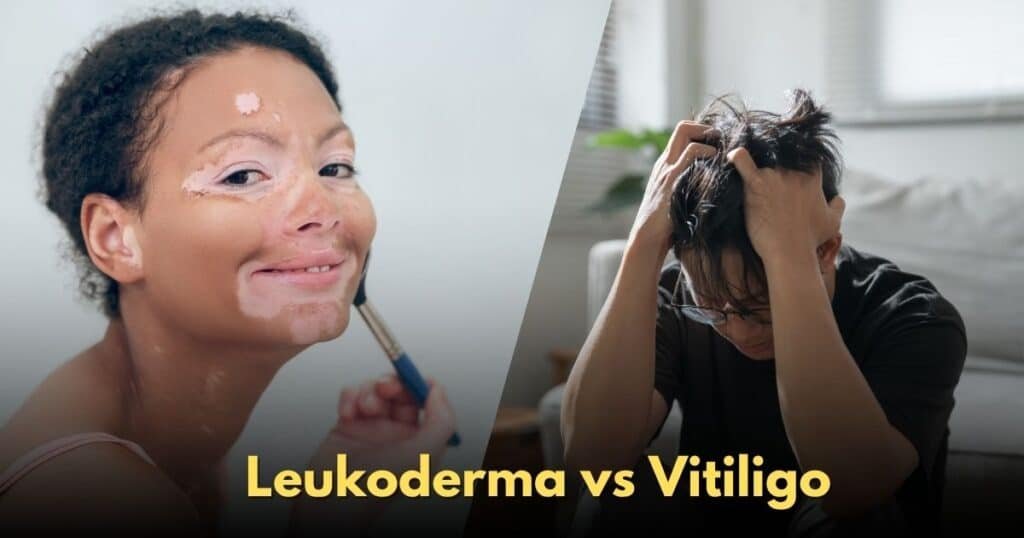
Leukoderma is a general term, like saying “headache” – it describes any skin condition where patches of your skin lose color and turn white. Think of it as an umbrella term covering many different causes of white patches on skin.
Vitiligo is one specific type of leukoderma, like how a migraine is one specific type of headache. It’s a particular disease with its own causes and patterns.
What Happens Inside Your Skin
Your skin contains special cells called melanocytes that produce melanin – the pigment (color) that gives your skin its tone. When these cells stop working or disappear, that area of skin loses color and turns white.
How Vitiligo Works
In vitiligo, your body’s immune system (which normally fights infections) gets confused and mistakenly attacks your own melanocytes. Think of it like friendly fire – your defense system accidentally destroys the cells that give your skin color. This is called an autoimmune reaction.
Scientists don’t fully understand why this happens, but it seems to involve a combination of your genes (what you inherit from parents), environmental factors (things around you), and how your immune system functions.
Also Read: 10 Early Signs of Vitiligo You Shouldn’t Ignore
How Leukoderma Works
Leukoderma can happen for many different external reasons:
Chemical exposure: Certain harsh chemicals found in industrial settings, hair dyes, bleaching products, or cosmetics can damage melanocytes when they touch your skin repeatedly. Workers in rubber manufacturing, chemical plants, or beauty salons may be at higher risk.
Physical injury: Burns, cuts, wounds, or even repeated rubbing and friction on the same spot can damage the melanocytes in that specific area.
Medications: Some drugs can affect melanocyte function as a side effect.
Visual Differences You Can Notice
Vitiligo Appearance
The white patches in vitiligo typically appear symmetrically – meaning if you get a white patch on your right hand, you’ll likely get a similar one on your left hand too. Common locations include:
- Hands and fingers, especially knuckles
- Feet and toes
- Face, particularly around the mouth and eyes
- Armpits and groin areas
- Areas around body openings (nostrils, belly button, genitals)
The patches often spread gradually over time to other body parts. Hair growing in affected areas may also turn white.
Leukoderma Appearance
Chemical or injury-related leukoderma usually stays localized – it appears only where the chemical touched your skin or where the injury occurred. You might notice:
- Many small, “confetti-like” white spots clustered together
- White patches that don’t spread to distant body parts
- Pattern matching where chemicals or injuries occurred
- Hair in affected areas typically stays its normal color initially
Age and Who It Affects
Both conditions can affect anyone regardless of gender or ethnicity. However, vitiligo most commonly begins appearing between ages 10 and 30 years. The white patches are more noticeable and concerning for people with darker skin tones because of the stark contrast.
Approximately 1% of people worldwide have vitiligo.
Progression Over Time
Vitiligo: Usually progressive, meaning it continues spreading to new areas over months or years. Stress, sunburn, cuts, or chemical exposure can trigger new patches or make existing ones worse.
Leukoderma from external causes: Often remains stable in the affected area and doesn’t spread throughout the body like vitiligo does.
Associated Health Conditions
Because vitiligo is autoimmune, people with vitiligo have higher chances of developing other autoimmune conditions like:
- Thyroid disorders
- Type 1 diabetes
- Pernicious anemia (vitamin B12 deficiency)
- Addison’s disease
Leukoderma from external causes typically doesn’t carry these same risks.
Diagnosis
Doctors can diagnose both conditions through:
- Visual examination
- Wood’s lamp test – a special ultraviolet light that makes white patches more visible
- Skin biopsy (taking a tiny sample) to examine melanocyte presence
- Medical history about chemical exposures or injuries
Treatment Approaches
Both conditions can be treated, though results vary from person to person:
- Corticosteroid creams to reduce immune activity
- Light therapy (phototherapy) using UVA or UVB light to stimulate melanocytes
- Immunomodulating medications
- Skin grafting surgery for stable patches
- Camouflage makeup to even out skin tone
- Self-tanning products (always use with sunscreen)
- White patches lack melanin protection, making them extremely vulnerable to sunburn
- Daily broad-spectrum sunscreen is essential
- Protective clothing for sun exposure


Pingback: सफेद दाग (विटिलिगो): कारण, लक्षण और उपचार - Vitiligoo
Pingback: Vitiligo Diet Plan: Everyday Foods to Support Melanin Production - Vitiligoo