
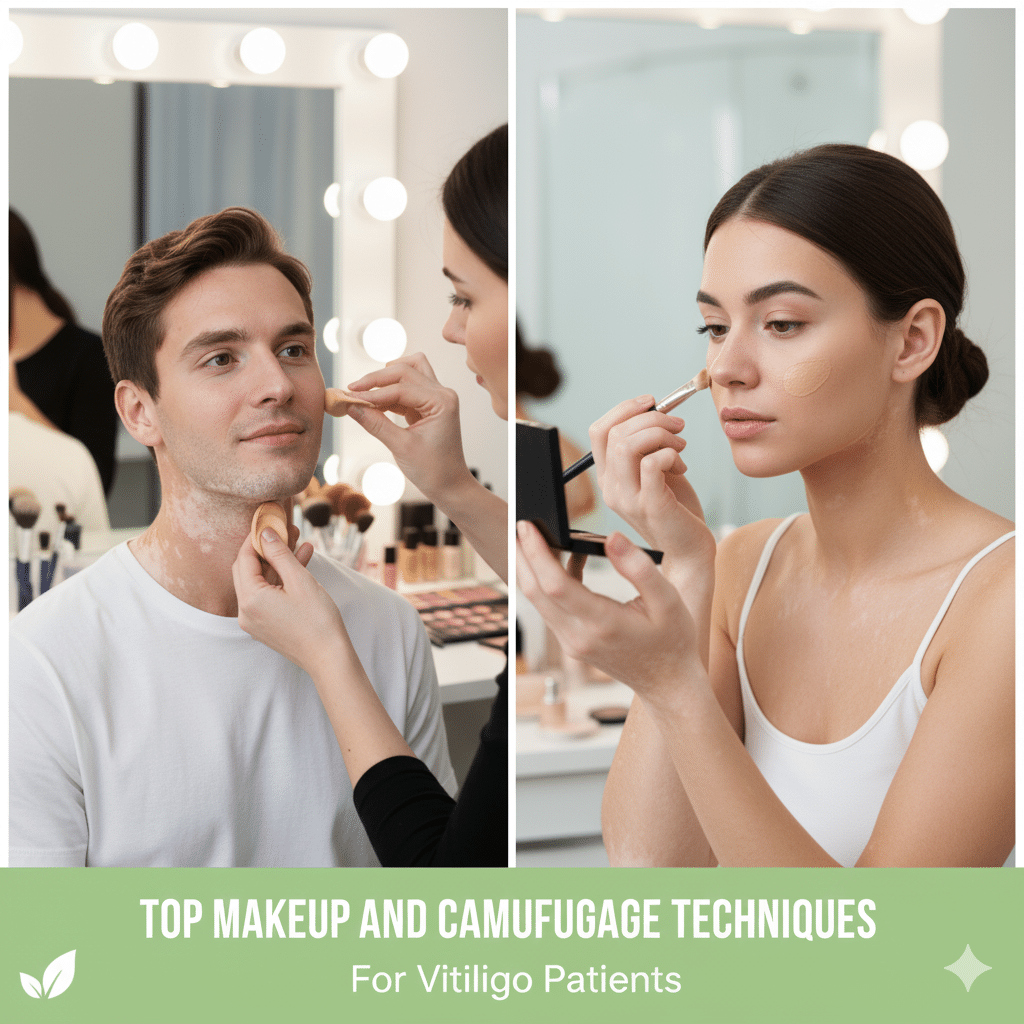
Vitiligo creates visible patches of lighter skin caused by the loss of melanin. While it is harmless, it can influence how someone feels about their appearance. For many people, makeup becomes a practical and empowering way to even out skin tone and enhance natural features.
This guide provides trusted, detailed, and practical information on makeup techniques, recommended products, and expert tips designed specifically for individuals with vitiligo.
What is Camouflage Makeup and Why Is It Useful for Vitiligo?
Camouflage makeup refers to high-pigment cosmetic products developed to cover discoloration, scars, burns, and pigment loss. Unlike regular makeup, these formulas are:
- Long-lasting
- Sweat-resistant and often water-resistant
- Highly concentrated to provide excellent coverage
- Suitable for sensitive skin when chosen correctly
Types of camouflage products commonly used for vitiligo include color correctors, concealers, full-coverage foundations, and setting powders.
Also Read: What is Skin Pigment? Understand How Melanin Works
Best Makeup Products for Covering Vitiligo
Below are the most effective product types and what makes them useful:
1. Color Correctors
Color correctors help neutralize undertones before applying concealer or foundation.
- Peach or orange shades work well to soften blue or grey undertones on light or medium skin.
- Deep orange correctors are effective for deeper skin tones.
2. High-Coverage Concealers
Choose a concealer that is:
- Creamy and buildable
- Designed for sensitive skin
- Long-wear or transfer-resistant
These products help mask lighter patches without looking cakey.
3. Foundations
Select foundations with:
- Natural or warm undertones
- Buildable, medium-to-full coverage
- A shade that matches your surrounding skin tone
Liquid foundations typically blend more smoothly over corrected areas.
4. Setting Powders
Setting powders help keep makeup in place throughout the day.
Translucent powders work for all skin tones, while tinted powders add an extra layer of blending.
5. Camouflage Makeup Kits
Professional kits include several shades, allowing you to mix custom colors and match multiple body areas more accurately.
Also Read: Best way to Increase Melanin in Skin for Vitiligo Naturally?
Step-By-Step Guide to Applying Makeup for Vitiligo
1. Prep the Skin
- Cleanse gently to remove dirt and oils.
- Apply a moisturizer suitable for your skin type.
Healthy, hydrated skin improves coverage and longevity.
2. Apply Primer
Primer creates a smooth base and helps makeup stay intact for longer periods, especially in humid weather.
3. Correct the Undertones
Use your chosen color corrector on vitiligo patches.
Tap lightly with your finger or sponge to blend without wiping away product.
4. Conceal and Even Out
Use a concealer or foundation over the corrected areas.
A damp sponge often provides the most natural finish.
5. Blend Carefully
Blend the edges to avoid sharp lines between corrected areas and natural skin.
6. Set the Makeup
A light layer of setting powder or a setting spray can help lock everything in place.
7. Touch-Ups (Optional)
Carry a small concealer for long days, though high-coverage formulas often last many hours without retouching.
Additional Camouflage Options Beyond Makeup
1. Micropigmentation (Medical Tattooing)
This technique deposits pigment into the skin to create a long-lasting color match.
It is best for small, stable patches and should only be done by trained medical professionals.
2. Body Foundations
These products are thicker and ideal for covering larger areas such as hands, legs, and arms.
3. Creative Makeup Looks
Some people celebrate their vitiligo by highlighting the contrast with bold or artistic makeup.
Both camouflage and creative expression are valid choices—what matters is what makes you feel confident.
Safety Tips for Best Results
- Choose hypoallergenic, fragrance-free cosmetics to reduce irritation.
- Test new products on a small area first.
- Practice application techniques before important events.
- Remove makeup gently using mild cleansers or micellar water.
- Consult a makeup artist experienced in camouflage techniques for personalized shade matching.
Also Read: Vitiligo and Sun Exposure: Do’s and Don’ts
Summary
Vitiligo does not define your beauty, and makeup is simply a tool—an option, not a requirement—to help you feel your best. With the right techniques and products, it is possible to achieve a smooth, natural finish or explore creative styles that celebrate uniqueness. Experiment, take your time, and choose what makes you feel confident every day.
Frequently Asked Questions (FAQs)
Q1. What type of makeup works best to cover vitiligo?
High-coverage concealers, color correctors, and full-coverage foundations designed for sensitive skin typically offer the best results.
Q2. Which color corrector should I use?
Peach or orange correctors are most effective for neutralizing bluish or grey tones on vitiligo patches.
Q3. Can makeup worsen vitiligo?
Makeup does not worsen vitiligo. However, using gentle, fragrance-free products helps avoid irritation.
Q4. How can I make my vitiligo makeup last all day?
Start with a primer, apply makeup in thin layers, and finish with a setting powder or spray.
Q5. Are permanent options available?
Micropigmentation (medical tattooing) offers semi-permanent coverage for small, stable areas but should be done only by qualified professionals.

