
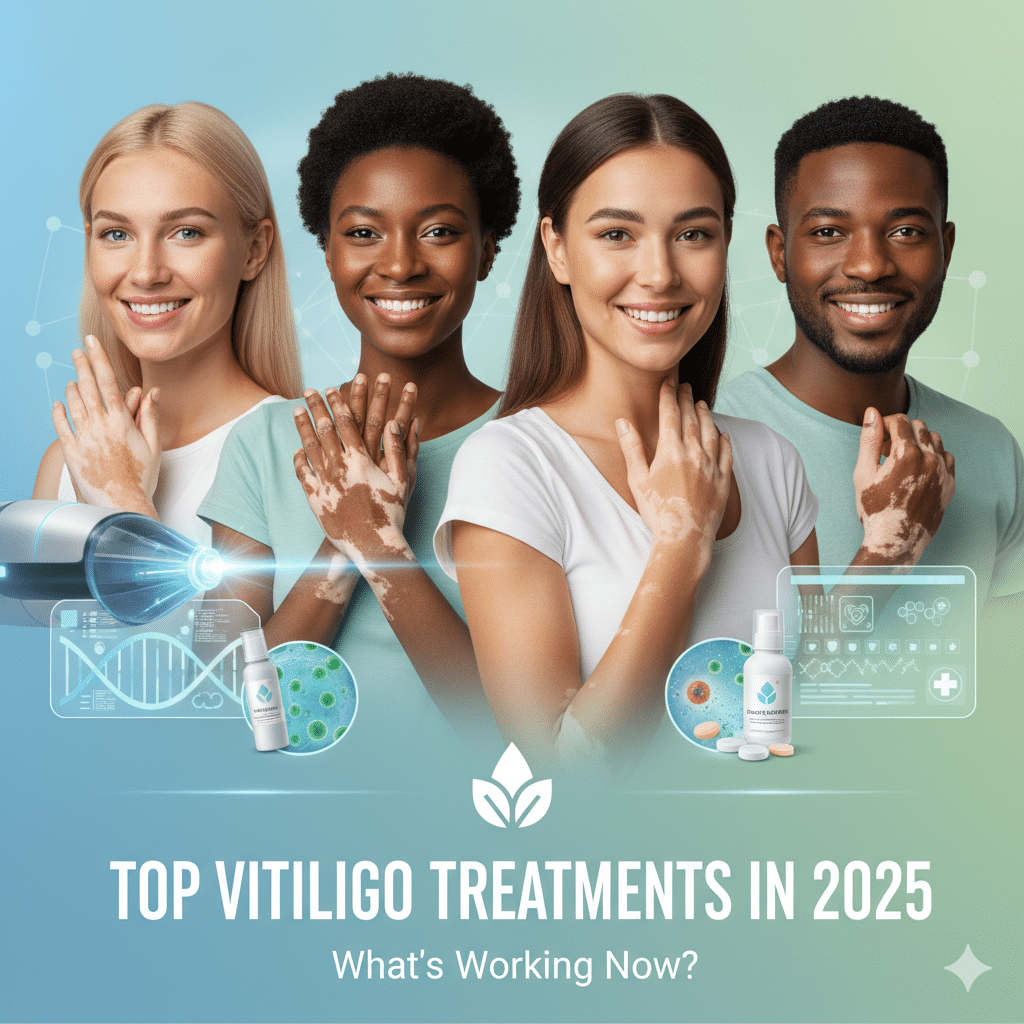
Vitiligo treatment has seen remarkable advancements in 2025, offering new hope to patients seeking effective and safe options for repigmentation and disease control. This article explores the latest, evidence-backed therapies that are proving to be most effective now.
Oral Janus Kinase Inhibitors (JAKi)
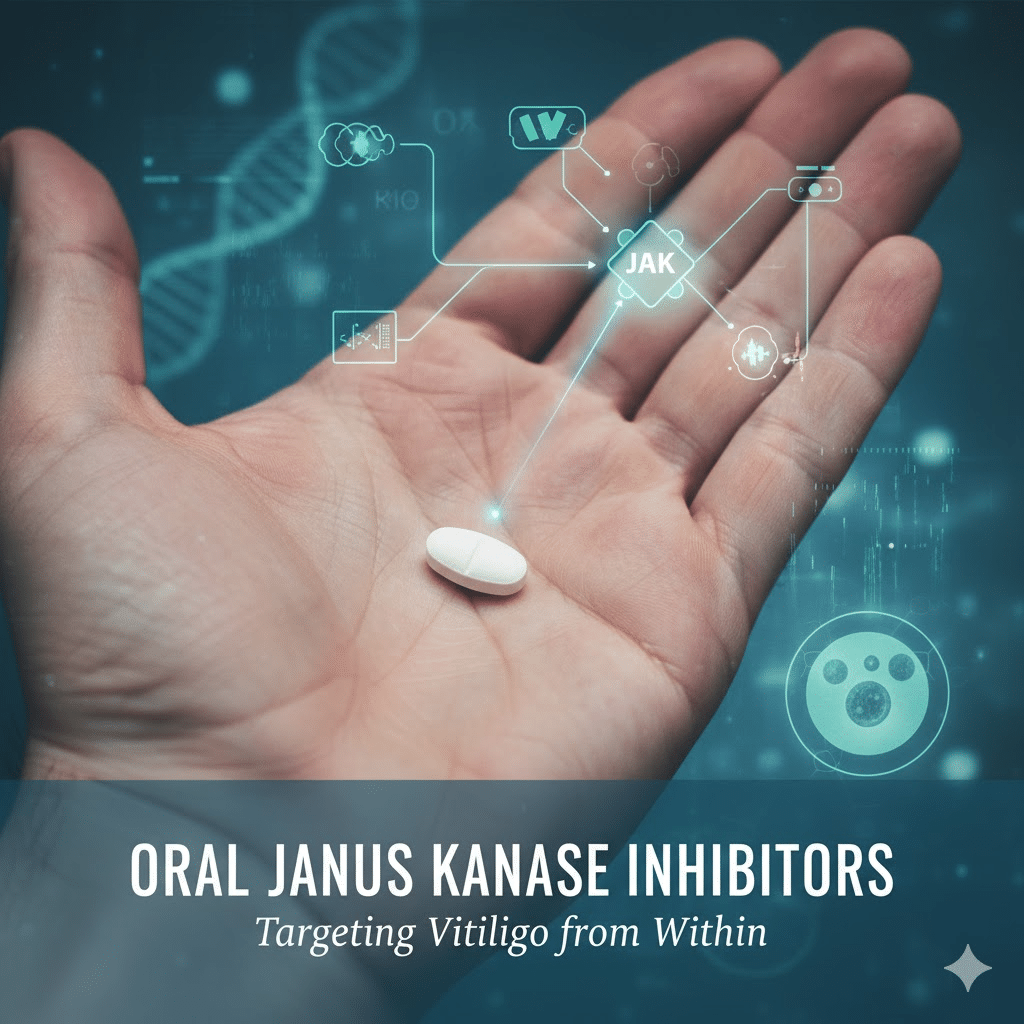
Oral JAK inhibitors remain a revolutionary treatment for vitiligo. Studies show approximately 55% of patients achieve significant repigmentation with continued therapy beyond six months, with a strong safety profile and minimal adverse effects. JAK inhibitors such as upadacitinib and ritlecitinib inhibit the immune pathways attacking skin pigment cells, enabling repigmentation and halting disease progression. Combining JAK inhibitors with narrow-band UVB phototherapy enhances repigmentation results, reaching about 70% improvement on facial areas in clinical trials.
Also Read: Vitiligo – Types, Symptoms, Causes, Treatment Options, Myths and more
Topical Therapies: Ruxolitinib and Immunomodulators
Topical ruxolitinib cream, FDA-approved for non-segmental vitiligo, is highly effective especially on facial and acral areas. Newer enhanced formulations enable deeper skin penetration, increasing success rates and reducing irritation. Tacrolimus and pimecrolimus remain foundational topicals. Combination use with phototherapy boosts efficacy, producing repigmentation over months of treatment.
Phototherapy and Light-Based Treatments
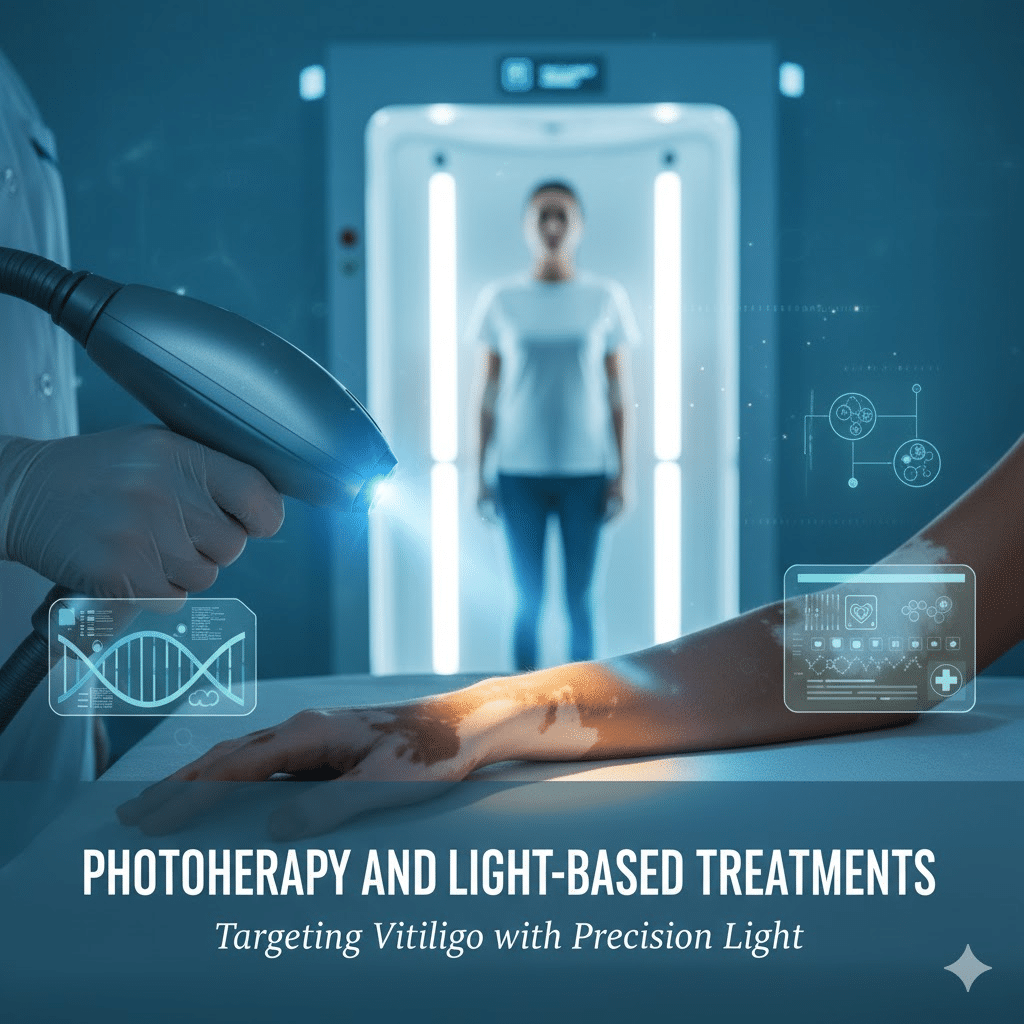
Narrow-band UVB (NB-UVB) phototherapy continues to be a cornerstone for widespread or stubborn vitiligo, suppressing the immune attack on melanocytes and stimulating pigment restoration. Advances in portable home phototherapy units improve treatment accessibility and adherence. Fractional CO2 laser and 308 nm excimer laser combined therapy show superior repigmentation with minimal side effects in clinical studies, especially for non-segmental vitiligo.
Emerging Therapies: Microbial and Combination Treatments
Novel microbial therapies derived from Bacillus subtilis show promise in modulating immune responses and slowing vitiligo progression, potentially offering standalone or synergistic effects alongside conventional treatments. Research into combining new oral agents such as upadacitinib with light therapies shows synergistic repigmentation benefits for nonsegmental vitiligo.
Also Read: What is Skin Pigment? Understand How Melanin Works
Adjunctive Approaches
- Intralesional 5-fluorouracil combined with phototherapy shows enhanced repigmentation in resistant lesions.
- Ayurvedic herbal formulations, including Bakuchi and Gandhaka Rasayana, have shown promising re-pigmentation and symptom relief in clinical case reports.
- Nutritional support with antioxidant-rich diets and probiotics is gaining traction as part of integrative care, supporting overall skin health and immune balance.
Psychological and Quality of Life Considerations
Addressing mental health and promoting confidence remain vital. Treatment success improves quality of life, reducing stress and social stigma associated with vitiligo.
Summary
In 2025, effective vitiligo management combines systemic JAK inhibitors, targeted topicals, phototherapy, and emerging biological or microbial therapies. Innovations in delivery and combination regimens optimize results, with ongoing research expanding treatment options rapidly. Patients benefit from personalized protocols integrating medical, supportive, and psychological care to restore skin pigmentation and well-being.
Also Read: 10 Early Signs of Vitiligo: How to Recognize Symptoms?
Frequently Asked Questions (FAQ)
Q1: What are the most effective treatments for vitiligo in 2025?
The most effective vitiligo treatments currently include oral Janus kinase inhibitors (such as upadacitinib), topical ruxolitinib cream, and narrow-band UVB phototherapy. Combining these treatments, especially JAK inhibitors with phototherapy, shows the best results for repigmentation and disease control.
Q2: How long does it take to see results from vitiligo treatments?
Treatment response varies, but patients can expect initial repigmentation to appear after 1-3 months of consistent therapy, with more significant improvement after 6 months or longer. Light therapy requires multiple sessions per week over several months to reach optimal results.
Q3: Are these new treatments safe?
Safety profiles for JAK inhibitors and topical immunomodulators are generally favorable, but ongoing studies continue to monitor long-term effects. Mild side effects like redness or itching from phototherapy are common but usually temporary. Always consult a dermatologist for personalized advice.
Q4: Can vitiligo be cured with these treatments?
Currently, vitiligo treatments aim to halt disease progression and restore skin color, but there is no permanent cure. About 10-20% of patients may experience full repigmentation. Combining therapies offers the best chance for significant improvement.
Q5: Is phototherapy safe for children and all skin types?
Yes, narrow-band UVB phototherapy is considered safe for patients of all ages and skin tones when used under medical supervision. Home phototherapy units are available for convenience, but guidance from a healthcare professional is essential.
Q6: Are there any promising new therapies on the horizon?
Emerging microbial therapies and advanced combination regimens are showing promise. Research on repigmentation-enhancing agents like prostaglandins and innovative delivery methods such as lipid nanocarriers are ongoing and may provide more effective future options.
Q7: Can diet or natural remedies help with vitiligo treatment?
While scientific evidence remains limited, antioxidant-rich diets and certain Ayurvedic herbal formulations may support skin health and complement medical treatments. Patients should discuss any supplements with their healthcare provider.
Medical Disclaimer:
The information provided in this article is for educational and informational purposes only and is not a substitute for professional medical advice, diagnosis, or treatment. Always seek the advice of a qualified healthcare provider with any questions you may have regarding a medical condition or treatment. Never disregard professional medical advice or delay in seeking it because of something you have read here. The author and publisher do not accept any responsibility for any liability, loss, or risk incurred as a consequence of the use and application of the contents of this article.

